












ego (lite) is just a browser, ego is your personal agent across devices.
Join waitlist
LinkedIn data research with a policy check

LinkedIn scraper policy guide for profiles and jobs what is actually allowed

Before you automate LinkedIn data collection, check LinkedIn's current rules. This guide shows when to use an official API, a LinkedIn export, or a human-reviewed browser workflow—and how to keep permitted profile or job research source-linked without bypassing platform controls.

Download for Mac(yes, free)

Trusted by developers from

OpenAIAnthropicGoogleMetaNVIDIACursorPerplexity
SpaceXTeslaNotionFigmaStripeNetflixAirbnb

How to research LinkedIn profiles and jobs without bypassing controls

Use this four-step process to choose a permitted access path, define a narrow research brief, record only what the selected source allows, and review the report. If LinkedIn's current policy does not permit your automation, stop and use an official API, export, or manual workflow instead.

1

Check LinkedIn's current access rules

Read LinkedIn's User Agreement and its Help Center guidance on prohibited software and extensions. If your use case is not expressly permitted, choose an official API, an account export, or manual research instead of connecting an automation tool.
2

Define a bounded, reviewable research brief

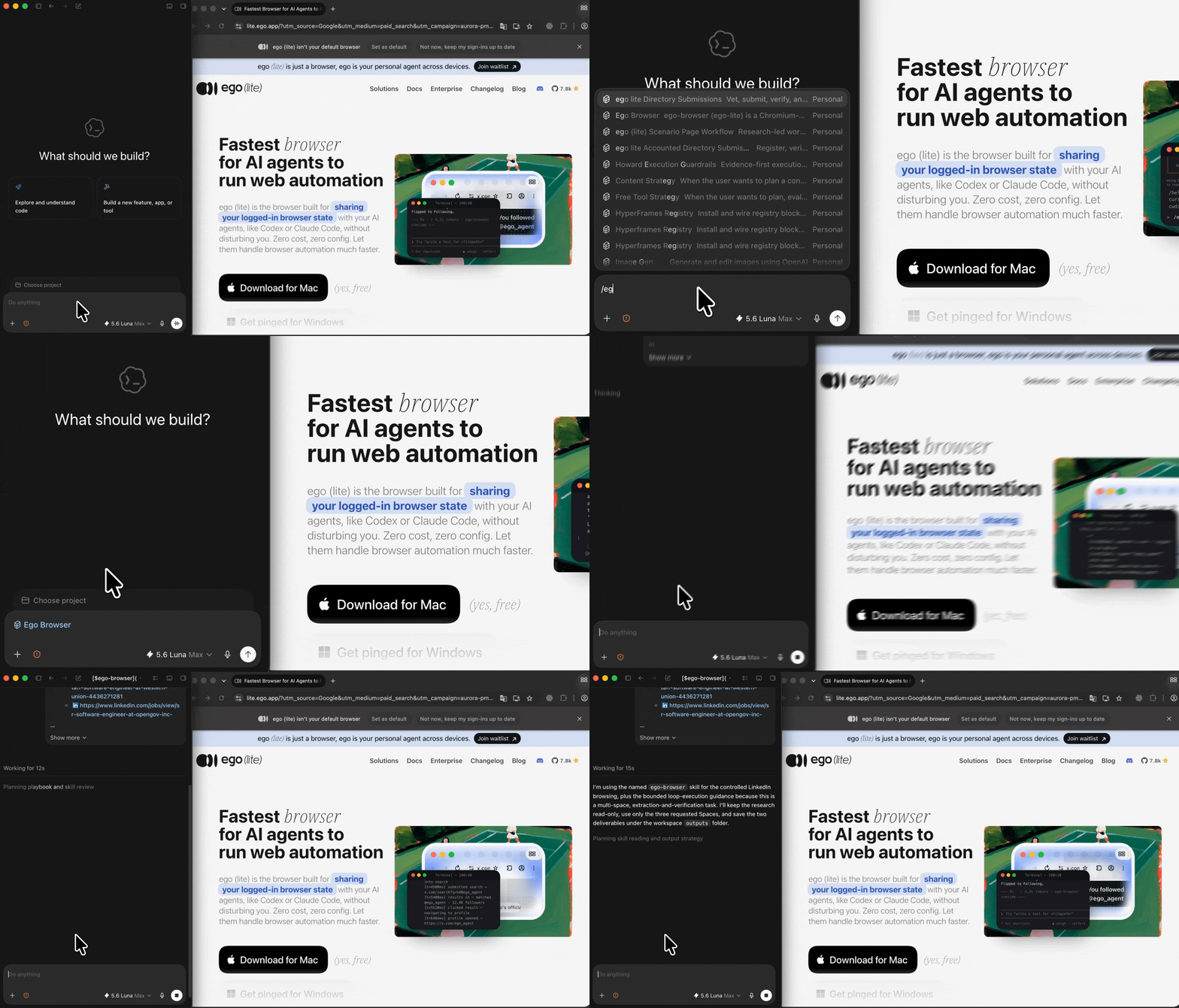
List the profile or job URLs, permitted fields, output format, retention period, and stop conditions. Do not assume a public URL grants permission to crawl it, and do not provide credentials or ask an Agent to evade a restriction.

Preparing a browser research brief with ego (lite) for permitted LinkedIn data
3

Collect only what the permitted source displays

For an approved API, export, or human-reviewed browser task, record only visible fields and keep the source and access status beside them. Stop if LinkedIn requests login, verification, CAPTCHA, or another decision; do not run parallel automation against an account when the platform rules prohibit it.

Parallel ego (lite) Spaces for LinkedIn profile and job research tasks
4

Review and retain the source-linked report

Check every profile or job field against the permitted source, then export CSV or Markdown with source URL, checked-at time, access status, limitations, and retention notes. Unavailable fields stay marked instead of being filled with assumptions.

Reviewing a source-linked LinkedIn public-data report in a spreadsheet

Why use ego (lite) as a LinkedIn scraper?

A browser can make permitted research visible and auditable, but it cannot override LinkedIn's rules. ego (lite) fits the narrow, review-first case: an authorized source or official export, a bounded field list, separate Spaces, and a report that keeps sources and access limits together.

Keep permitted LinkedIn research reviewable

ego (lite) helps your AI agent organize an approved API, export, or human-reviewed browser task. It keeps visible fields, source URLs, access status, and limitations together in a report without claiming that public visibility permits automated scraping.

Task-time comparison showing ego (lite) completing browser tasks faster than an agent browser

Multitask across separate Spaces

For an approved workflow, keep each profile, job search, or job listing task in its own ego (lite) Space. The Spaces keep browser state separate while you use your everyday tabs and return to each task when it is ready for review.

Parallel ego (lite) Spaces for separate LinkedIn profile and job research tasks

Monitor parallel tasks and take over when needed

Open any Space to see which LinkedIn profile or job page the Agent is checking while other tasks continue in parallel. If one task reaches login, verification, CAPTCHA, or another human decision, take over that Space yourself and let the rest keep moving.

Use the browser context you authorize for LinkedIn research

Open the Space to see which profile or job page the Agent is checking. If LinkedIn asks for login, verification, CAPTCHA, or another human decision, take over the browser yourself instead of asking the Agent to bypass it.

ego (lite) Chrome context import for an authorized LinkedIn browser session

Keep public engagement and job research separate

Treat profile fields, post engagement, and job listings as different datasets with different permission and retention decisions. Record only the fields the permitted source exposes; do not turn a list of viewers, likers, or commenters into inferred identities or contact data.

Independent browser Spaces for separate LinkedIn profile, engagement, and job research

Handle virtualized job lists as incomplete until verified

LinkedIn search results can render only a visible slice, so a browser report must not claim it found every job. Capture the query, page or cursor state, visible count, checked-at time, and any pagination or access limitation; use an official feed or export when completeness matters.

LinkedIn job result list marked as a bounded visible slice with a completeness limitation

What a LinkedIn scraper can and cannot access

ego (lite) follows the visibility of the LinkedIn page in the browser context you choose, but a visible page is not blanket permission to automate collection. Use an official API, export, written permission, or other documented permitted path; ego (lite) cannot unlock private profiles, hidden contact information, or platform controls.

What your Agent can record

Only where an official API, export, written permission, or current platform policy permits the collection.

  • Fields returned by an official LinkedIn API or account export that your organization is allowed to retain
  • Visible profile or job fields in a human-reviewed browser task when the use case is authorized
  • A bounded result set with the query, source URL, checked-at time, access status, and completeness limits
  • Source URL, checked-at time, data type, access status, and limitations for every row

What stays unavailable or unverified

Private, hidden, restricted, or identity-level claims do not become public.

  • Third-party crawlers, bots, browser plug-ins, or extensions that LinkedIn's Help Center prohibits for scraping or automated activity
  • Private profiles, connections-only fields, hidden email addresses, phone numbers, or private messages
  • Bypassing login, CAPTCHA, verification, rate limits, blocks, or other LinkedIn controls
  • Inferring a person's identity, employment, contact details, or missing job information
  • Sending messages, connection requests, job applications, or changing LinkedIn account data in this read-only workflow

Read LinkedIn's scraping guidance

Research permitted LinkedIn profile and job data you can review later

Confirm the access basis, give your Agent a defined list and fields, then review the visible data before exporting a source-linked report with access status and checked-at time.

Try the policy-aware workflow

LinkedIn scraper FAQ: profiles, jobs, and access

A LinkedIn scraper is software or a workflow that collects information from LinkedIn pages. LinkedIn's current Help Center says third-party crawlers, bots, browser plug-ins, and extensions that scrape or automate activity are not permitted. Before collecting anything, check the current User Agreement, an official API or export, and any written permission that applies to your use case.

LinkedIn's current Help Center says it does not permit third-party software, including crawlers, bots, browser plug-ins, or browser extensions, that scrape, modify, or automate activity on its website. A page being visible is not a blanket permission to automate it. Use an official API, account export, or a documented and authorized workflow; if the rules do not permit your use, do not connect an automation tool.

For an approved use case, give Codex or Claude Code a bounded list and the prompt on this page. The Agent can open an authorized source in a separate ego (lite) Space, record what the browser displays, and return CSV or Markdown rows. If LinkedIn asks for login, verification, CAPTCHA, or another human decision—or if the platform rules prohibit the automation—it stops and lets you review or choose another access path.

Public visibility alone is not permission to automate collection. Use ego (lite) for profile fields only when an official API, export, written permission, or other documented basis permits the workflow. The report marks a field unavailable when LinkedIn hides it, asks for access, or does not show it; it does not reveal private profile fields or infer missing identity details.

Only when an official API, export, written permission, or other documented basis permits collecting those job postings. A visible job page is not blanket permission to automate it. For an approved source, record the visible title, company, location, work mode, posted date, description, job URL, checked-at time, and access status; a job that disappears, requires login, or does not expose a field stays marked instead of being completed from a guess.

LinkedIn search results may use a virtualized list that renders only the visible slice, and login, region, pagination, or rate controls can narrow it further. Treat the result as incomplete unless you can verify the query, pagination state, visible count, and an approved source of completeness. Record the limitation and use an official feed or export when you need every job.

Only when an official API, export, or written permission permits that dataset. Do not assume that a visible list of likers, commenters, or viewers may be collected or used for outreach. If an approved source exposes engagement rows, keep the post URL, timestamp, access status, and retention rule; do not infer identities or hidden contact information.

Export the approved fields to CSV or JSON first, then map them into your CRM or sheet only after validating source URL, checked-at time, access status, required columns, duplicate rows, and retention policy. Keep the export reviewable and do not send private or restricted fields to a third party merely because the destination accepts CSV.

No. A real browser does not override LinkedIn's rules or guarantee that an account will not be restricted. The safest decision is to use an official API or export where available, keep activity within documented permission, and stop when LinkedIn shows a warning, verification, CAPTCHA, or rate limit. Do not rotate proxies, replay cookies, or spoof fingerprints to evade controls.

A free download does not make a prohibited workflow permitted, and it does not mean unlimited crawling. ego (lite) is free to download for Mac, but any permitted research still depends on the source's rules, your agent's model cost, and the data you are authorized to retain. Use an official API or export when LinkedIn provides one for your use case.

Unlike an unbounded LinkedIn crawler, ego (lite) is an Agent-driven browser workflow with a defined input list. It opens public profiles or job pages in visible Spaces and returns a reviewable report. The scope stays bounded by your inputs, the browser's access, and LinkedIn's current controls.

A private profile or field may be visible in a browser session you are authorized to use, but visibility alone does not permit automated collection. Collect it only when an official API, export, written permission, or other documented basis allows the workflow. ego (lite) cannot bypass connection visibility, privacy settings, login, approval, verification, CAPTCHA, or other LinkedIn controls; protected information remains unavailable and is recorded as a limitation.

No promise is made for hidden contact data. The workflow records an email address or phone number only if LinkedIn visibly provides it in the authorized session and your task is permitted to collect it. It does not infer, buy, or retrieve hidden contact information from another source, and it marks unavailable fields clearly.

You can use a bounded, reviewable workflow to compare public LinkedIn profile or job-page changes that you are allowed to research. Give the Agent a defined list and fields, keep the source URL and checked-at time, and review any difference before acting on it. This is not an unbounded crawler or a promise of hidden competitor intelligence.

Not in this LinkedIn scraper workflow. It is designed for public profile and job-data research. Sending messages, connection requests, or job applications creates an external action and stays outside this page's read-only collection flow; use the separate job-application workflow when you intentionally want to review that task.

ego (lite) is free to download for Mac, and the Agent doing the work is your own Codex or Claude Code. The workflow does not promise unlimited crawling or access to restricted data: what it can report depends on the pages and browser context LinkedIn allows you to see.

The Agent stops in that Space and records the visible restriction instead of solving or bypassing it. You can inspect the browser state, complete an authorized human step yourself if appropriate, or end the run. The report keeps the source, time, and blocked status so a limited result is not mistaken for a complete one.